- August 10, 2026
- By WAB_DEV2
- In Blog, Body Repair Services, RV Body Repair Shops
- 353
- 3

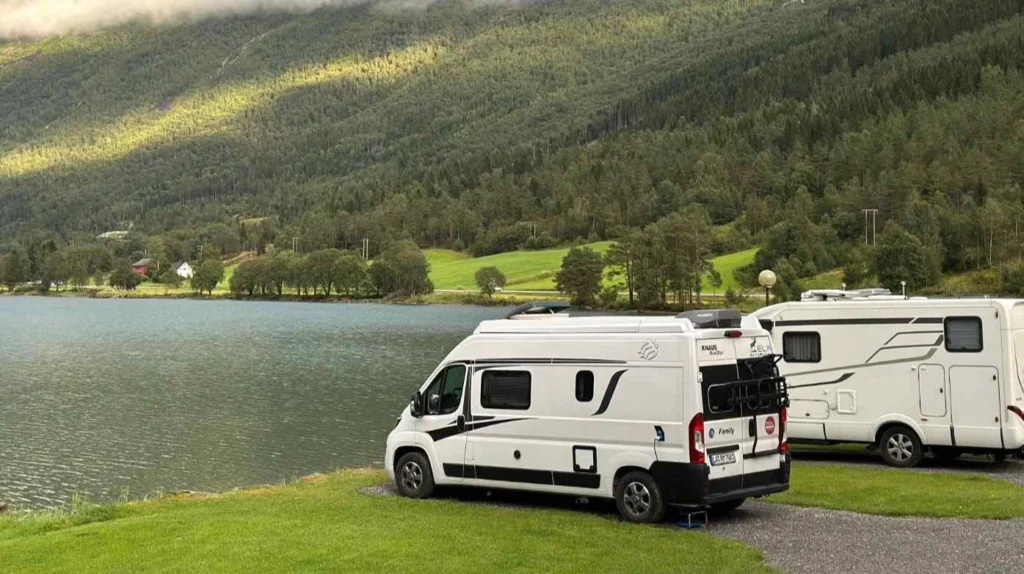
Discovering water damage in your RV can be stressful, especially when you don’t know how far the damage has spread or how much the repairs will cost. A small ceiling stain or soft spot in the floor may seem like a simple fix, but water can travel behind walls, underneath flooring, and into structural components long before the damage becomes visible.
The RV water damage repair cost can range from a relatively small repair for a failed seal or minor leak to several thousand dollars when moisture has damaged flooring, walls, insulation, framing, or other structural components. The final price depends primarily on the source of the water, how long the leak went undetected, how far the moisture traveled, and how much material needs to be removed and restored.
At World Auto Body, we inspect both the visible damage and the areas underneath or behind your RV to identify hidden problems and determine the full repair scope. Our RV body repair services help address exterior and structural damage while providing a clear estimate before major work begins.

Professional RV water damage repair costs can range from approximately $150 for minor leak or seal repairs to $10,000 or more for extensive structural restoration. In severe cases involving widespread rot, delamination, framing damage, or extensive reconstruction, total repair costs can exceed $20,000.
These are broad estimates because RV water damage varies significantly from one vehicle to another. A leaking roof vent that is caught early may require only a relatively simple repair. By comparison, the same leak left untreated for months could damage the roof decking, insulation, interior ceiling, wall framing, and flooring.
DIY repairs may have lower upfront material costs, often several hundred dollars depending on the materials required. However, professional repairs involve more than the cost of replacement materials. Labor, moisture detection, disassembly, structural assessment, specialized equipment, refinishing, and proper restoration can all affect the final price.
The most important factor is how deeply the moisture has penetrated before the leak is stopped.
There is no single price that applies to every RV, but the following categories can help you understand what to expect:
| Damage level | Typical repair scope | General cost range |
|---|---|---|
| Minor | Seal failure, small leak, limited surface damage | $150–$1,000 |
| Moderate | Localized floor, wall, ceiling, or insulation damage | $1,000–$5,000 |
| Severe | Rot, mold, delamination, framing, or structural restoration | $5,000–$10,000+ |
| Extensive | Widespread structural reconstruction | $10,000–$20,000+ |
These ranges are general estimates rather than fixed prices. The actual RV water damage repair cost can be higher or lower depending on the RV’s construction, accessibility, materials, extent of damage, and required restoration.
Minor water damage is usually limited to the source of the leak or a small surrounding area. Examples include deteriorated sealant, a leaking roof vent, or a small amount of localized moisture that has not affected the underlying structure.
Moderate water damage may involve flooring, insulation, wall panels, or ceiling materials. Repairs become more involved because damaged materials may need to be removed before the underlying area can be properly dried and restored.
Severe water damage occurs when moisture has reached structural components. Rotten wood framing, damaged subfloors, extensive mold, wall delamination, or widespread moisture intrusion can turn a relatively small leak into a major restoration project.
A professional estimate should account for more than the visible stain or damaged surface. Depending on the situation, an RV water damage assessment may include:
This detailed approach helps prevent the common problem of repairing the visible damage while leaving the underlying source untreated.
The biggest mistake RV owners can make is assuming that the visible damage represents the full repair. Water can move through an RV’s construction, making the final scope much larger than what initially appears.
A small leak around a roof vent may be relatively straightforward to repair. Damage involving a wall, floor, slide-out, or structural section can require substantially more labor and materials.
For example, RV roof leak repair cost may remain relatively low when the problem is limited to failed sealant. If the leak has damaged the roof decking or traveled into the interior, additional restoration may be required. Our RV roof repair services address roof leaks and related damage to help prevent further water intrusion.
The longer water remains inside an RV, the greater the chance that it will spread into materials that are difficult to see. A leak that is repaired quickly may require localized work, while long-term moisture intrusion can result in rot, mold, damaged insulation, delamination, and structural deterioration.
Access can have a major effect on the final estimate. Technicians may need to remove flooring, wall panels, cabinets, furniture, trim, or other components before reaching damaged areas.
The RV slide-out water damage repair cost can vary depending on how far the moisture has spread and whether the slide-out floor, walls, seals, or surrounding components are affected. Because slide-outs contain multiple mechanical and structural components, more extensive damage may require additional restoration. Our RV slide-out repair services help address both water-related and mechanical slide-out damage.
Once moisture reaches wood framing or other structural materials, the repair becomes much more extensive. Damaged materials may need to be removed rather than simply dried or covered.
Mold and rot can also spread beyond the area where the original leak was visible, which is why a thorough inspection is important before determining the final repair scope.
Material costs vary depending on what needs to be restored. A small seal or patch requires far fewer materials than replacing a section of subfloor, fiberglass, roof membrane, insulation, or structural framing.
The final estimate may also include refinishing or repainting areas after the underlying water damage has been repaired.
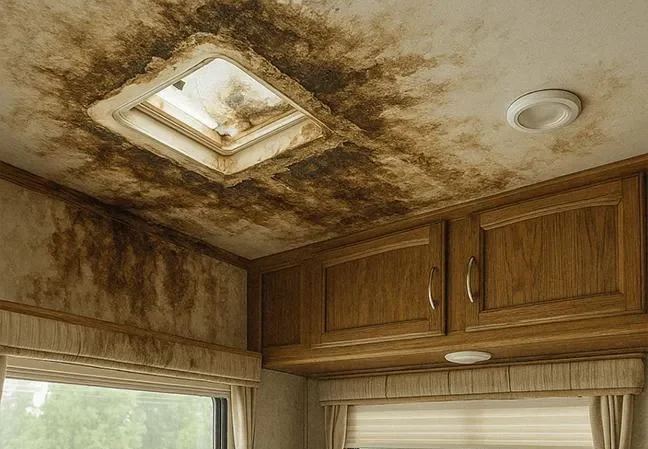
Water rarely stays exactly where it enters. Depending on the source, moisture can travel through the RV and affect several different components.
Roof leaks are among the most common sources of RV water damage. Water can enter through deteriorated sealants, vents, skylights, antennas, roof-mounted equipment, or damaged roofing materials.
A ceiling stain may therefore indicate a problem above the visible area rather than a ceiling problem itself.
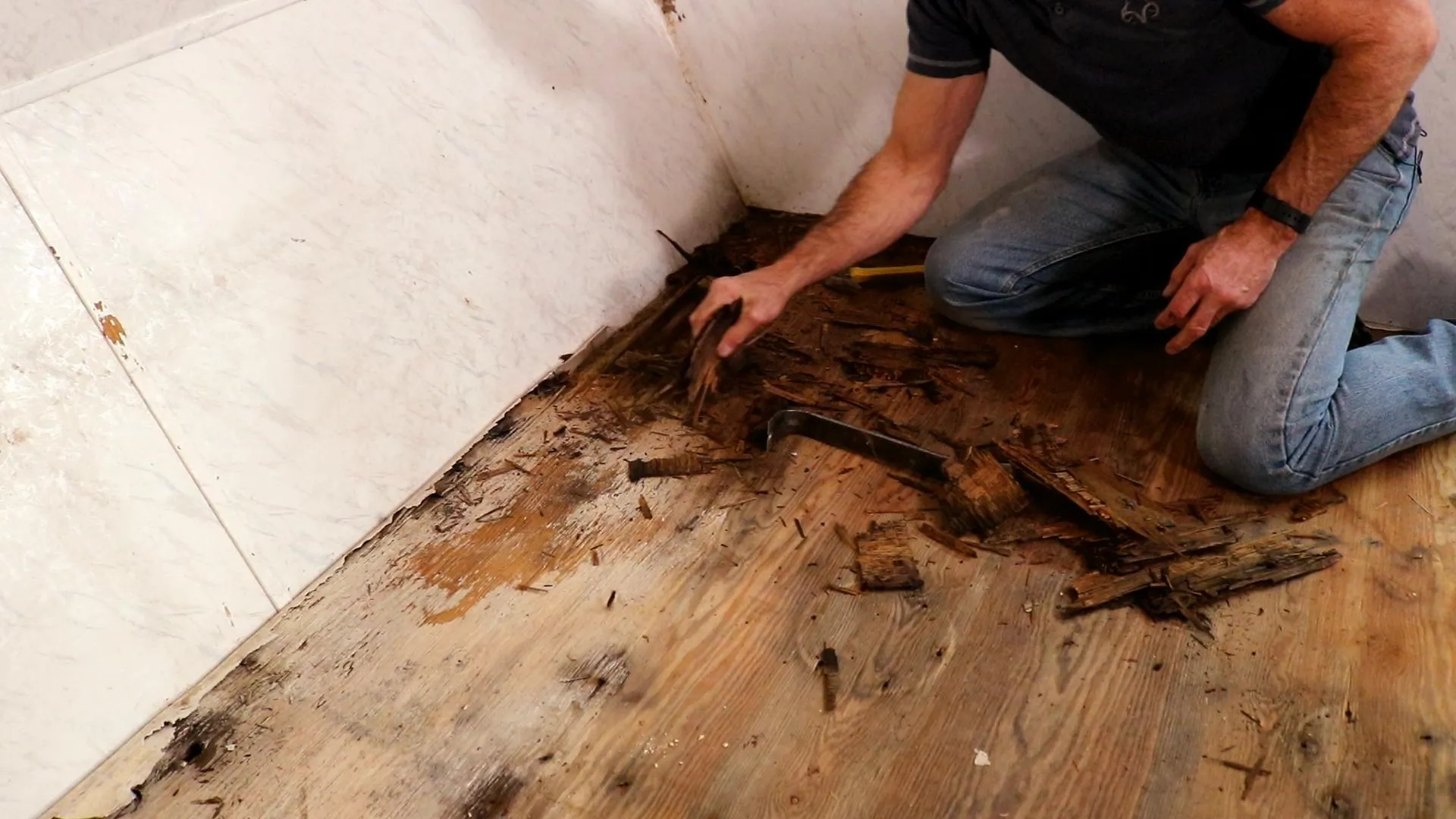
Water can reach the floor through roof leaks, plumbing failures, doors, windows, or slide-outs. Persistent moisture can weaken the subfloor, cause wood rot, and create soft or unstable areas.
For significant floor damage, RV water damage floor repair cost depends on how much of the subfloor and supporting structure needs to be removed and replaced.
Slide-outs are particularly vulnerable to water intrusion because they contain moving components, seals, exterior seams, and floor sections that are exposed to the weather.
A damaged seal may allow water to enter around the slide-out and eventually affect the flooring, insulation, walls, or surrounding structure. More extensive RV slide out water damage repair cost may involve both water restoration and slide-out repairs.
Water can enter through windows, doors, seams, roof transitions, exterior fixtures, and damaged body panels. Once moisture reaches the wall structure, it can damage insulation, framing, adhesives, and fiberglass components.
Early detection can make wall repairs significantly more manageable before widespread deterioration develops.
The cost of RV water damage repair depends heavily on where the moisture entered, how far it spread, and which materials were affected. Different areas of an RV require different repair methods, labor, and materials.
What is repaired:
Roof leaks repair may require resealing damaged areas, repairing roof penetrations, or replacing damaged roofing materials.
What can increase the cost:
If water reaches the roof decking, insulation, ceiling, or structural components, the repair can become significantly more extensive.
What is repaired:
Water-damaged flooring may require removal of the affected surface and inspection of the subfloor underneath.
What can increase the cost:
Rotten wood, damaged framing, or widespread moisture can require sections of the subfloor and supporting structure to be replaced.
What is repaired:
Water intrusion around a slide-out may affect seals, flooring, subflooring, walls, and surrounding structural components.
What can increase the cost:
If moisture or structural movement has affected the slide-out mechanism, additional repairs to the system may also be necessary.
What is repaired:
Wall repairs may involve replacing damaged interior materials and restoring affected wall sections.
What can increase the cost:
Deep moisture intrusion can damage insulation, framing, fiberglass, and other structural components, increasing the scope of restoration.
What is repaired:
Water-damaged ceilings may require removal and replacement of stained, sagging, or weakened materials.
What can increase the cost:
If moisture has reached the insulation, roof decking, or structural components above the ceiling, additional restoration may be required.
What is repaired:
Water intrusion can weaken the bond between the exterior fiberglass and underlying wall structure, causing RV delamination.
What can increase the cost:
The RV delamination repair cost depends on the size of the affected area, the condition of the underlying structure, and whether the moisture source has been corrected.
A proper repair starts with finding the source of the water and determining how far the damage has spread. We don’t want to simply repair the visible symptom and leave the underlying problem unresolved.
We begin with a detailed inspection of the affected areas and surrounding components to understand the condition of the RV.
We look for signs of active or previous moisture intrusion and work to identify where the water is entering the vehicle.
We evaluate flooring, walls, ceilings, insulation, framing, and other affected components to determine whether the damage is cosmetic, localized, or structural.
Before restoring damaged materials, we address the source of the water intrusion so the same problem does not continue after repairs are completed.
Damaged flooring, insulation, wood, panels, or other materials may need to be removed and replaced depending on their condition.
Once the underlying damage has been addressed, we restore the affected areas and complete the necessary structural, body, flooring, or exterior repairs.
We complete a final inspection to verify the repair, check the affected areas, and ensure the RV is restored as safely and thoroughly as possible.
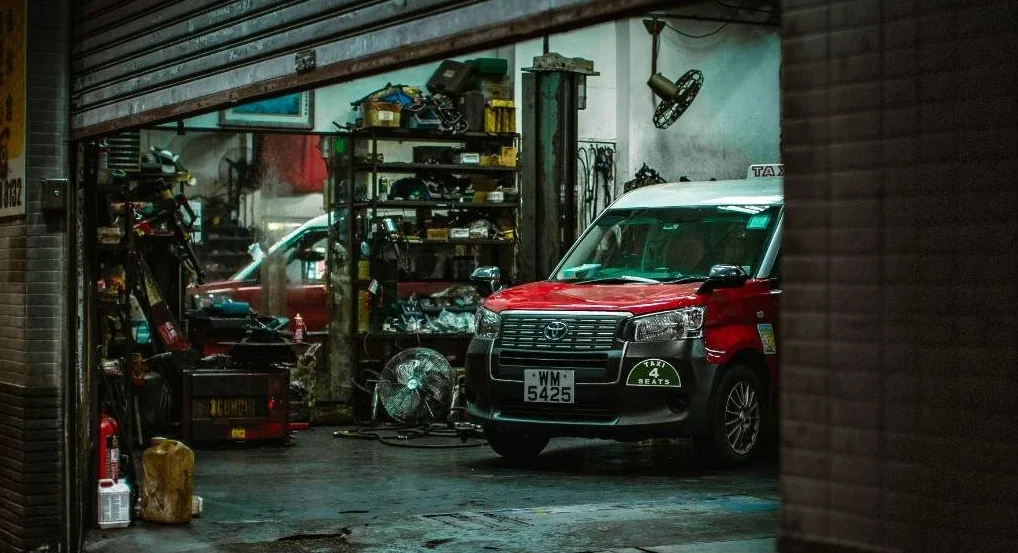
Water damage can look minor on the surface while hiding serious problems underneath. Professional restoration helps identify the full extent of the damage and prevents temporary fixes from becoming larger repairs.
Trying to save money by taking shortcuts can sometimes turn a manageable repair into a much larger restoration project.
Replacing a stained ceiling or damaged flooring without finding the source of the water allows the problem to continue underneath the new materials.
A dry-looking surface does not necessarily mean the materials underneath are dry. Hidden moisture can continue damaging wood, insulation, and other components.
Painting, sealing, or covering damaged materials does not restore structural strength. Moisture-damaged and deteriorated materials may need to be removed and replaced.
Household products or incompatible sealants may not withstand the movement, weather exposure, and temperature changes an RV experiences. Using materials appropriate for the specific RV component is important for a lasting repair.
Closing walls or floors before affected materials are properly dry can trap moisture and create an environment where mold and deterioration continue.
Waiting until you see major stains, soft flooring, or obvious structural problems can allow a small leak to become a much larger repair.
The longer water remains inside an RV, the greater the chance that a small leak will turn into a much larger repair. What starts as a simple seal or RV water leak repair can eventually affect flooring, walls, insulation, framing, and other structural components.
| What happens when repairs are delayed | How it increases the repair cost |
|---|---|
| Small leaks spread | Water can move beyond the original entry point and damage surrounding materials, expanding the repair area. |
| Wood begins to rot | Moisture-damaged framing and subfloors may need to be removed and replaced instead of simply dried or repaired. |
| Mold develops | Persistent moisture can lead to mold growth and additional cleaning, material removal, and restoration work. |
| Insulation becomes damaged | Wet insulation may lose its effectiveness and require removal and replacement. |
| Delamination spreads | Continued moisture can weaken the bond between fiberglass and the underlying wall structure, increasing restoration costs. |
| More materials must be removed | Extensive damage may require removing flooring, wall panels, cabinets, or other components to reach the affected areas. |
| Repair scope becomes larger | The longer the damage continues, the more labor and materials may be needed to restore the RV properly. |
The sooner an RV water leak is identified and repaired, the more likely the damage will remain localized. Regular inspections can help catch deteriorated seals, moisture intrusion, soft flooring, ceiling stains, and other warning signs before they develop into major structural problems. At the end of the day, a small repair today can prevent a much larger restoration bill later.
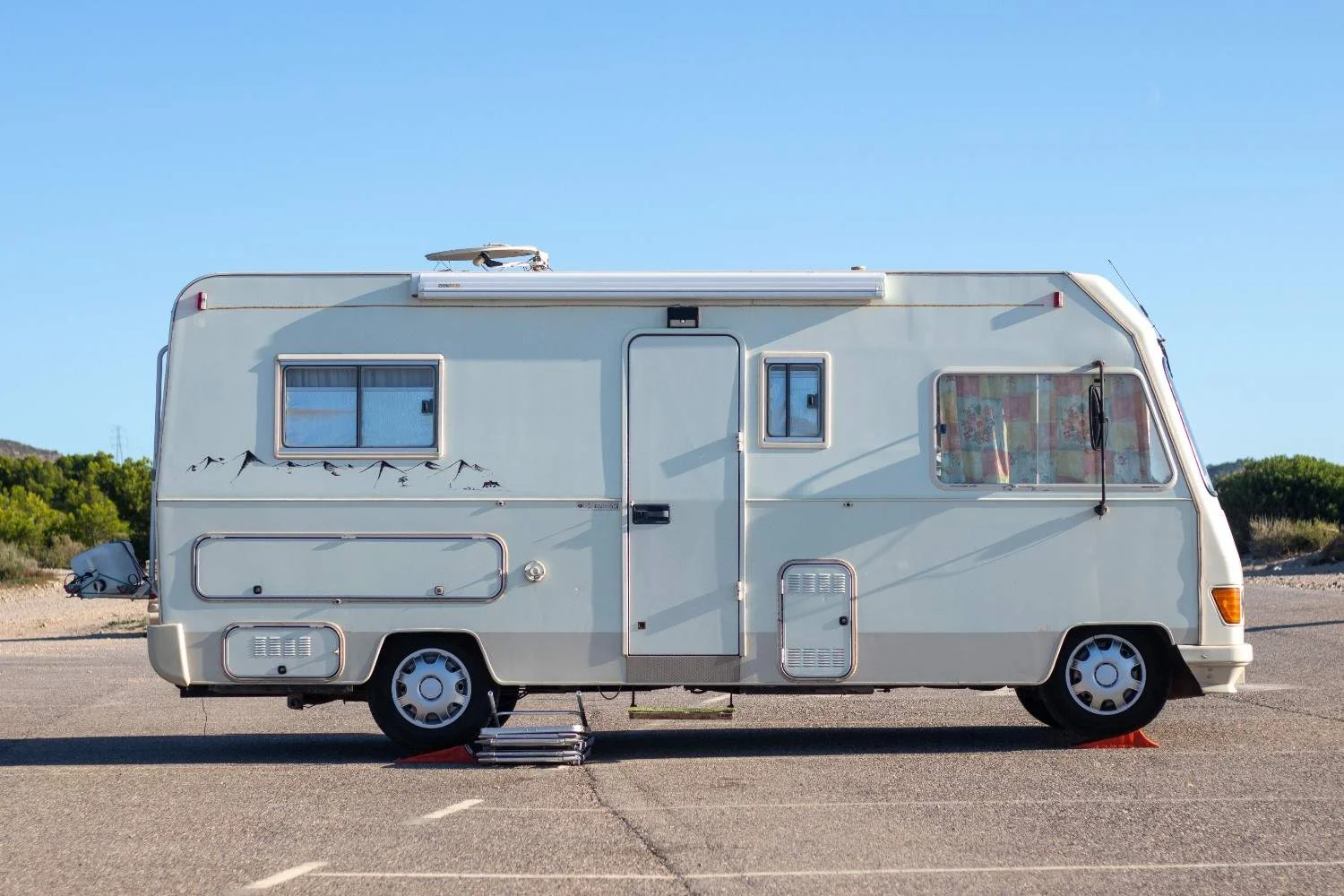
A damaged RV is not automatically beyond repair. The right decision depends on the extent of the damage, the RV’s age and condition, its current value, and the cost of restoring it properly.
| Factor | Repair may be done | Replacement may be better |
|---|---|---|
| Extent of damage | Damage is localized to one area and has not affected major structural components. | Water damage has spread across multiple areas of the RV. |
| Structural condition | The underlying framing, walls, and subfloor remain structurally sound. | Extensive rot, weakened framing, or major structural deterioration is present. |
| Delamination | Delamination is limited and the underlying wall structure is still in good condition. | Widespread delamination has affected large sections of the RV exterior or wall structure. |
| RV age & condition | The RV is relatively well-maintained and has significant remaining useful life. | The RV is older and already has substantial wear or other expensive repairs needed. |
| Repair cost | The estimated repair cost is reasonable compared with the RV’s current value. | Restoration costs approach or exceed what the RV is reasonably worth. |
| Overall value | The RV has features, condition, or personal value that justify restoration. | Replacing the RV may provide better long-term value than extensive reconstruction. |
| Inspection results | A professional inspection confirms that the damage can be properly restored. | An inspection reveals extensive hidden damage that makes complete restoration impractical. |
Visible water damage rarely tells the whole story. Moisture can travel behind walls, underneath flooring, and into structural components that cannot be evaluated from the surface alone.
A professional RV water damage inspection can identify the full extent of the damage and provide a more accurate repair estimate. This gives you the information needed to make a more informed decision about whether repairing or replacing the RV makes financial sense.
Water intrusion is one of the major causes of RV delamination. When moisture reaches the layers beneath the exterior fiberglass, it can weaken the adhesive bond and cause the outer material to separate from the underlying wall structure.
RV delamination occurs when the bonded layers of an RV’s exterior wall begin to separate, often due to moisture intrusion or adhesive failure over time. This separation can create visible bubbles, ripples, or waves on the surface, as well as soft or spongy areas that indicate the underlying structure is no longer properly adhered and may be weakening.
Localized delamination may be repairable when the underlying structure remains in good condition. More extensive damage may require removal and reconstruction of affected wall sections.
The RV delamination repair cost depends on the size of the affected area, the condition of the wall structure, and whether the underlying framing or insulation has also been damaged. Localized damage is generally easier to restore than widespread structural deterioration. Our RV delamination repair services address the underlying damage and help restore the affected wall structure.

Whether insurance covers RV water damage depends on the cause of the damage and the specific terms of the policy. Sudden or accidental events may be covered in some policies, while damage resulting from long-term leaks, poor maintenance, or gradual deterioration may be excluded.
If the damage resulted from a potentially covered event, useful documentation may include:
Insurance coverage varies, so RV owners should review their policy and confirm coverage with their insurance provider before assuming a repair will be covered.
The cost depends on where the leak originates and whether it has caused secondary damage. A simple seal or penetration repair may cost a few hundred dollars, while repairs involving damaged flooring, walls, insulation, framing, or delamination can cost thousands.
Insurance coverage depends on the cause of the damage and your specific policy. Sudden damage caused by a covered event may qualify for coverage, while long-term leaks, poor maintenance, and normal deterioration may be excluded. Check your policy and speak with your insurance provider before beginning major repairs.
The difficulty depends on how far the moisture has spread. A small leak or damaged seal may be relatively straightforward, while water that has reached the subfloor, walls, insulation, framing, or other structural components can require extensive disassembly and restoration.
Common signs include ceiling stains, soft flooring, bubbling walls, musty odors, cracked or deteriorated sealant, warped panels, discoloration, and visible leaks. However, some water damage remains hidden behind walls or underneath flooring, making professional moisture inspection important.
Many warranties exclude damage caused by poor maintenance, aging seals, gradual deterioration, or long-term water intrusion. Warranty coverage varies by manufacturer and policy, so you should review the specific terms of your RV warranty.
A proper leak inspection involves examining roof penetrations, seams, windows, doors, slide-outs, plumbing connections, and other potential entry points. Moisture testing and inspection of surrounding materials can also help identify hidden water intrusion.
The cost depends on how much flooring and subflooring is affected. A localized repair may be relatively affordable, while extensive rot, moisture-damaged framing, insulation, or structural deterioration can significantly increase the total repair cost.
The damaged area typically needs to be inspected to determine how far the moisture has spread. Water-damaged flooring and compromised structural materials may need to be removed and replaced, while the source of the leak must be repaired to prevent the damage from returning.
It depends on why the camper is leaking and what your policy covers. Sudden accidental or weather-related damage may be covered under some policies, while leaks caused by neglected maintenance or long-term deterioration may not qualify for coverage.
RV water damage repair costs can range from a relatively minor expense for a simple leak or failed seal to thousands of dollars when moisture reaches flooring, walls, insulation, framing, or other structural components. The earlier the problem is identified, the greater the chance of keeping the repair localized.
The most important step is finding the source of the water intrusion and determining how far the moisture has traveled. Repairing only a visible stain, soft floor, or damaged panel without addressing the underlying leak can allow the damage to continue and increase the eventual repair cost.
At World Auto Body, we provide professional RV water damage inspection and restoration to help identify visible and hidden damage and determine the appropriate repair solution. Whether your RV needs roof-related repairs, floor restoration, slide-out repairs, structural work, or delamination repair, our team can evaluate the full scope of the damage and provide a detailed estimate. If you suspect your RV has water damage, don’t wait for the problem to become more extensive. A professional inspection can help you understand the repair scope, potential costs, and whether restoring your RV is the right choice.


3 COMMENTS
Knoxville Auto Glass
September 9, 2026, 10:34 pm REPLYReally great reason to ensure there is a tight seal in the windshield and other glass locations on the car. Water damage can cause irreprable harm.
El Paso Auto Glass Co.
September 24, 2026, 6:10 pm REPLYThis is great advice. Water damage can happen from any entry point, even the windshield or sunroof, if not properly sealed.
Shreveport Auto Glass
September 29, 2026, 5:52 pm REPLYGreat info on locating the source of the leak and prventing future damage.